

- home
________________
- d1-switch
- network optimization
- streamer digital out
- CD transport
- reclockers
- d1-core DAC
- d1-unity DAC
- d1-biunity DAC
- d1-triunity DAC
- d1-sublime DAC
- d1-total streamer/DAC
- active crossovers
- live-clocking option
- live-power option
- bass boost option
- driver sublime
- amplifier sublime
- power regenerator
- Balloon speakers
- column speakers
- cables
________________
- how to use
- where to listen
- prices




Active crossovers



Totaldac's first products was a digital active crossover, that's the original expertise of Totaldac with a long feedback.These crossovers are 2-stereo-channel or 3-stereo-channel DACs with built-in digital crossover processing.
The inputs are digital (AES-EBU, coax, toslink, USB, network... like other Totaldac DACs and streamers) and the outputs are analog.
For example a 2-way crossover has a stereo analog output carrying only the bass signal and another stereo analog output carrying only the treble signal.
This allows to replace the crossover which is usually built in the speakers and control directly the drivers via 2 stereo amplifiers, one for the bass diver and one for the treble driver.
Such a crossover is also very easy to adjust when you design your own and unique speaker whereas each adjustment in a passive filter would be difficult and costly.
Each filter slope can be set to 6dB/oct, 12dB/oct or 18dB/oct low pass, high pass or band pass (Butterworth) and you can also adjust the time delay and the attenuation for each channel.
All these parameters are adjustable from the remote handset, and you can even increase or decrease the parameters while sitting at the listening place to find the optimum parameters.
A master volume control is also set from the remote handset, it controls the level of the bass channel and the treble channel at the same time.
Only moderate slopes are offered and no EQ is possible to keep the filtering simple and pure.
If you really need EQs you can anyway add a digital EQ or room corrector between the digital source and the digital active crossover.
The Totaldac crossover is also one of the only one keeping the sampling frequency unchanged from input to output. No sampling frequency conversion is used because they don't always sound transparent.
So you get exactly the same sound as the corresponding Totaldac DAC, with just more channels and the custom crossover processing in the FPGA, the heart of the Totaldac DACs.
The treble channel crossover can be set OFF from the remote, the DAC/crossover then becomes a standard Totaldac DAC to be used in any traditional hifi system in case later you don't need the active crossover anymore.
You have also an analog source which should use this active crossover as well? No problem, get also the Totaldac reclocker with ADC option, it will give you a stereo analog input and the reclocker will also reject the jitter for your digital sources.
The active crossovers can be based on the latest Totaldac DAC models, with the corresponding sound quality differences and the price differences.
Example of a system based on main speakers + subwoofers
The most common example consists in using a pair of main speakers helped by a pair of subwoofers. No home cinema subwoofers here but only the best components and the best electronics, closer to concerts than home cinema.Here the subwoofers are just a driver mounted in a cabinet, without any electronics, not even a passive crossover, so without any limitation, just the best driver in a well designed enclosure.
A high end amplifier drives this pair of subwoofers, here for example two Totaldac Amp-1-sublime amplifiers are used, one for the main speakers and one the subwoofers.
This allows to extend the bass of the main speaker but it allows also to place the main speakers for the best stereo and place the subs for the best bass because in a domestic room the best placement for stereo is usually not the same placement to get deep and clean bass.
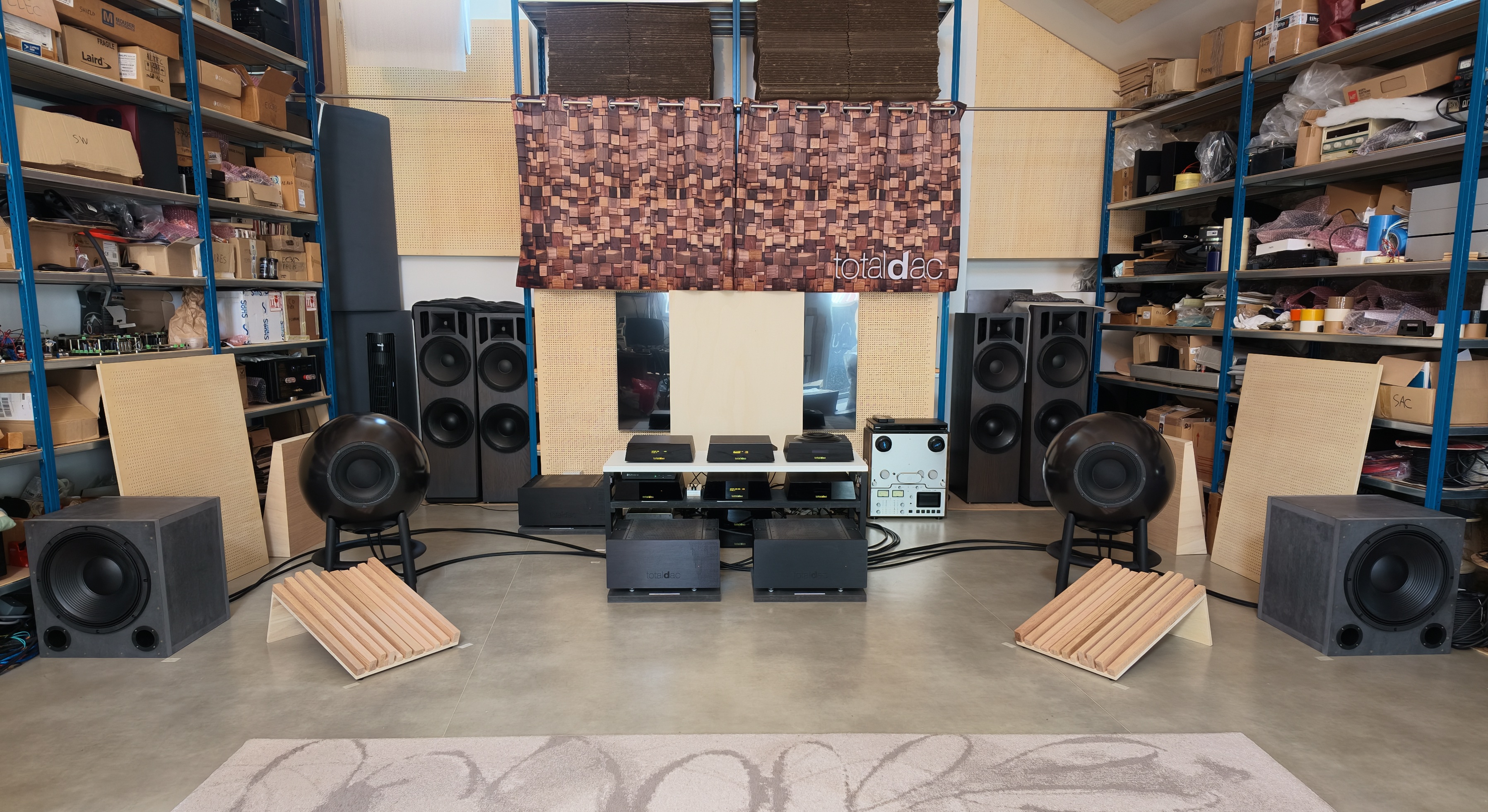
The DAC is replaced by a Totaldac d2-biunity active crossover. This crossover sends only 0Hz to 95Hz bass signal to the subwoofers and sends 95Hz to 20KHz+ to the main speakers.
These frequency are fully ajustable by the user from the remote control and display.
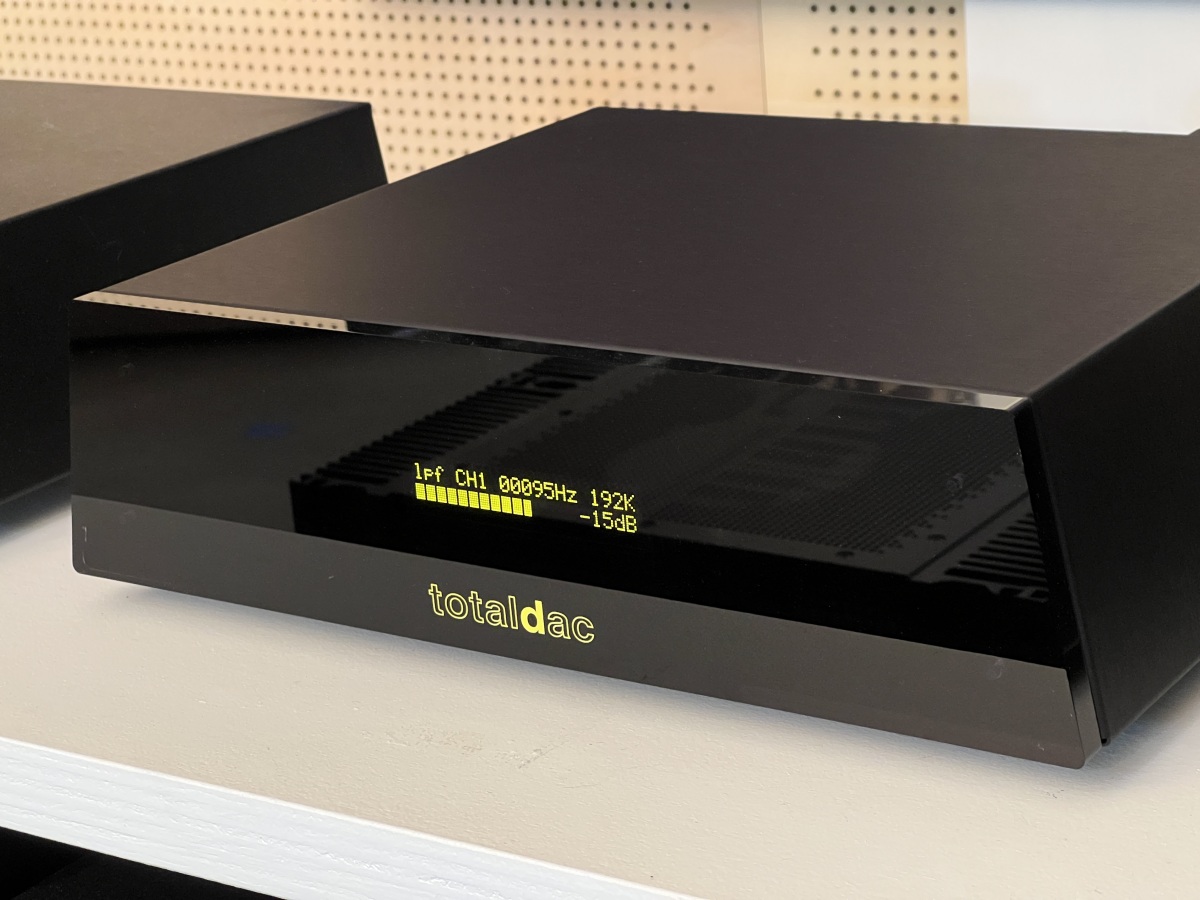
Slopes can also be chosen 6dB/octave (slight slope), 12dB/octave or 18dB/oct (sharper slope).
In this system 18dB/oct have been chosen for the subwoofers and 6dB/oct for the main speakers. It means that the bass frequencies of the main speakers are attenuated but not suppressed.
A frequency response measurement and listening tests have shown that this choice was optimum.
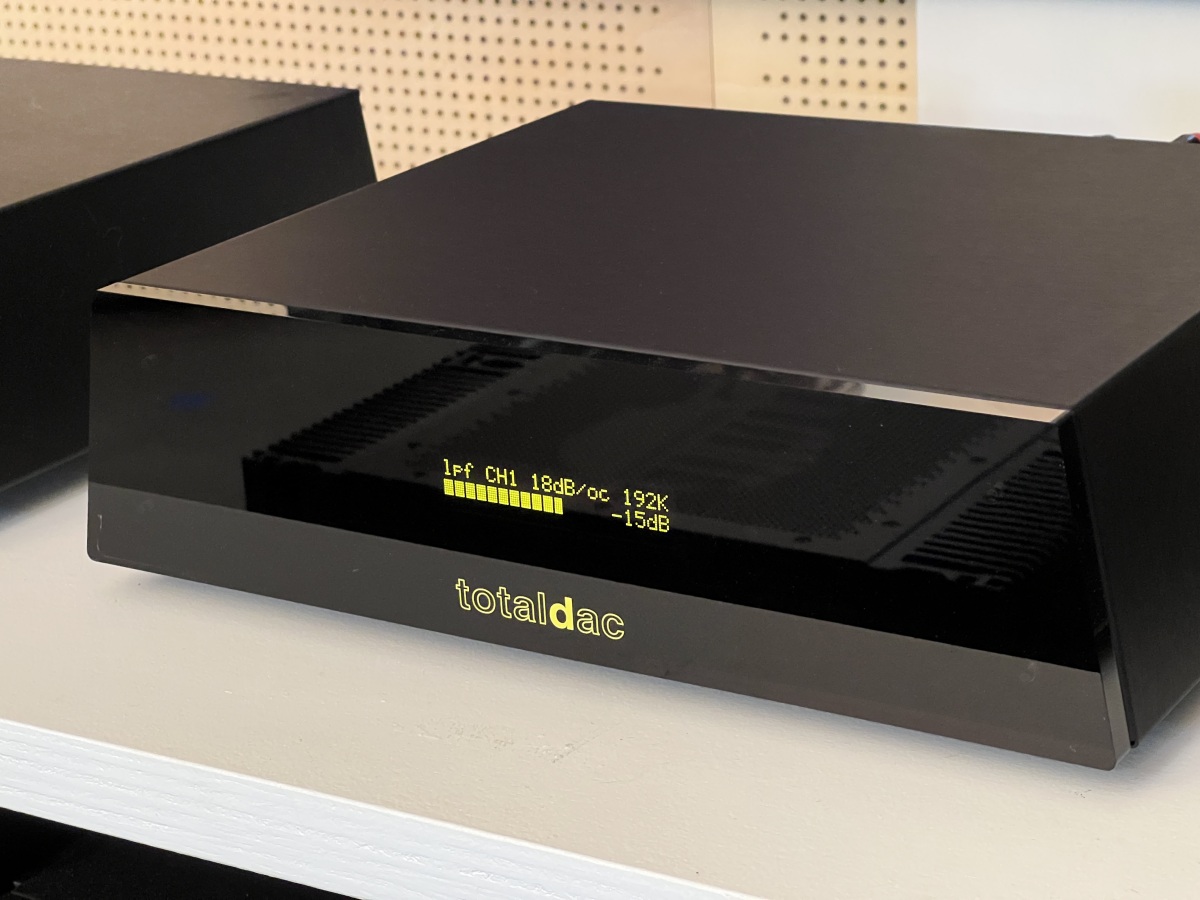
It is also possible to ajust the level of the subwoofers compared to the main speakers, to compensated a different in efficiency due to the speaker efficiency, due to the placement or due to the amplifier gain difference.
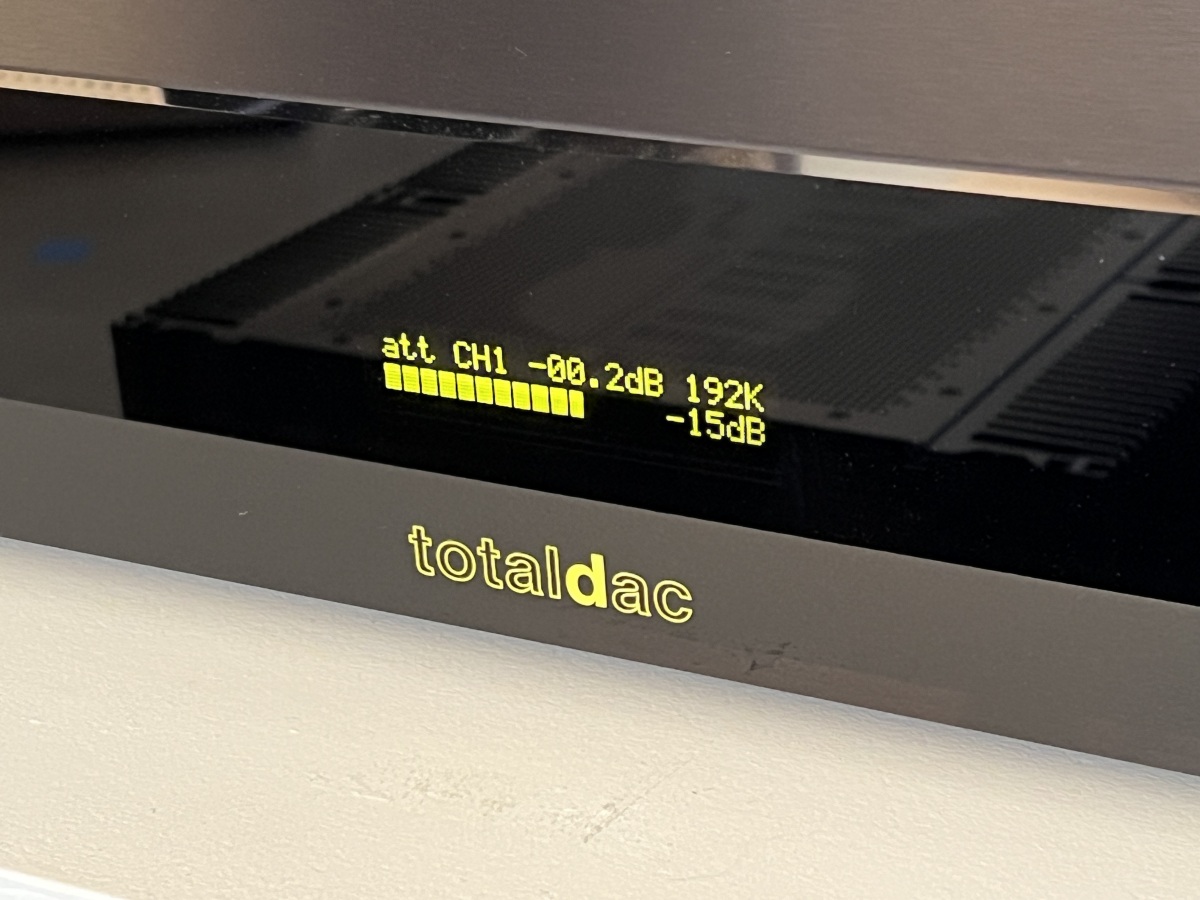
You can save these settings and then simply used the master volume control to adjust the volume (so this volume button on the remote controls all 4 channels).
A single button on the remote control allows you to switch back to full frequency range to the main speakers and mute the subwoofers, so switch back to the main speakers only
Another menu allows to adjust a delay (unit is centimeter) and this delay can be applied to the mains speakers and/or the subwoofers to compensate a distance of a phase shift. This would be impossible with a conventional subwoofer which allows to delay the subwoofer but never the main speakers.
d2-total
The d2-total is the 2-way crossover/DAC/streamer which represents the maximum that Totaldac can do in a single box.It can be connected to your local network and be used for example as a Qobuz Connect streamer, and control 2 stereo power amplifiers, all that in a single box.
The d2-total is composed of:
-d1-unity + d1-biunity DAC with only RCA outputs
-2-way crossover processing
-streaming board (same features as the d1-streamer-live or d1-total)
-40 femtoseconds oscillators + high performance digital buffers + high performance power supply decoupling (all of them developed for the d1-streamer-live)
-microfilter USB loop (developed for the d1-streamer-live)
-live-clocking option
-live-power option
-damping feet
On special request: balanced XLR outputs.
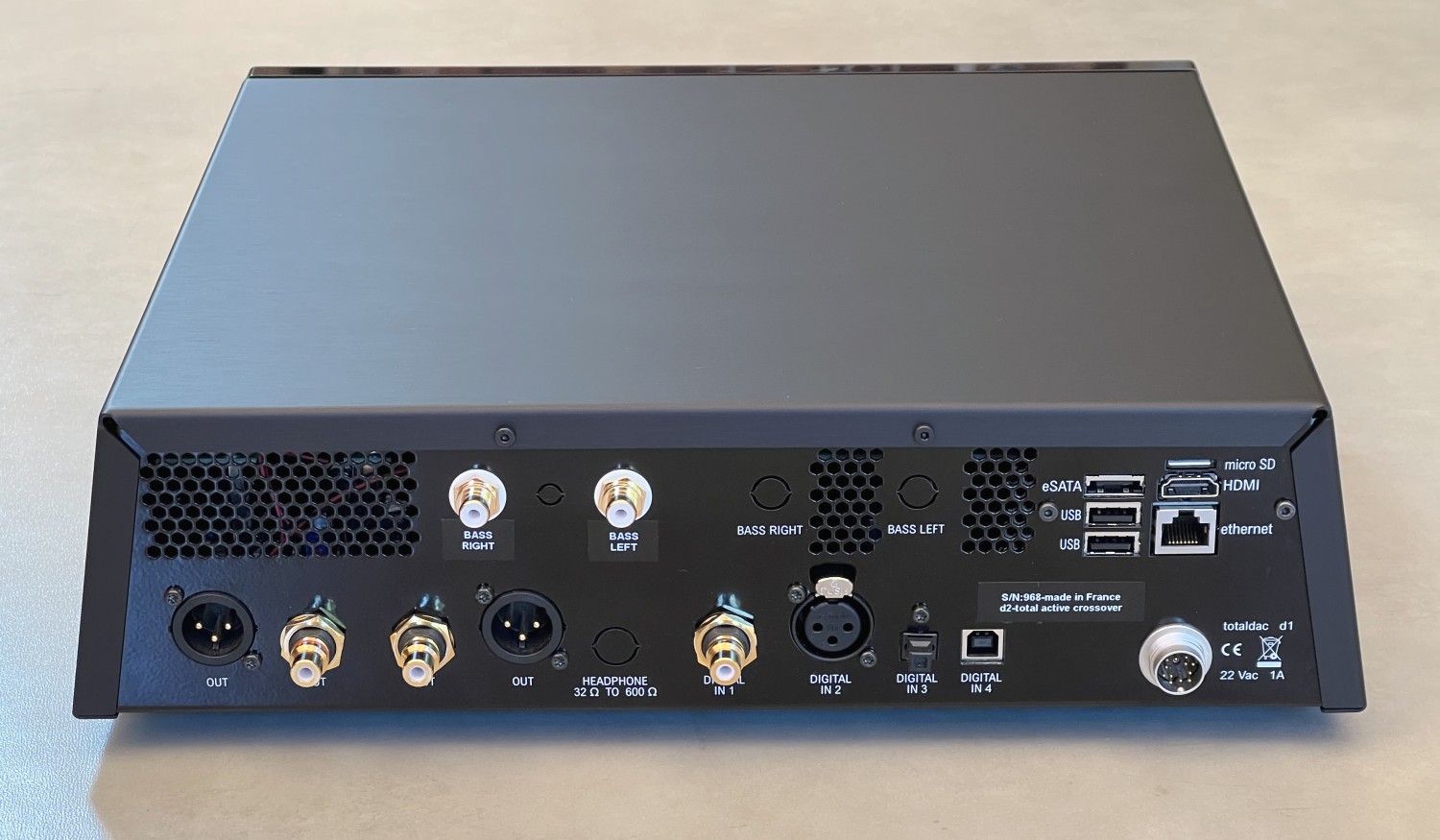
d2-biunity
The d2-biunity is the 2-way crossover/DAC based on the d1-unity and d1-biunity, it is composed of:-d1-unity + d1-biunity DAC with only RCA outputs
-the 2 way crossover processing
On special request: balanced XLR outputs.
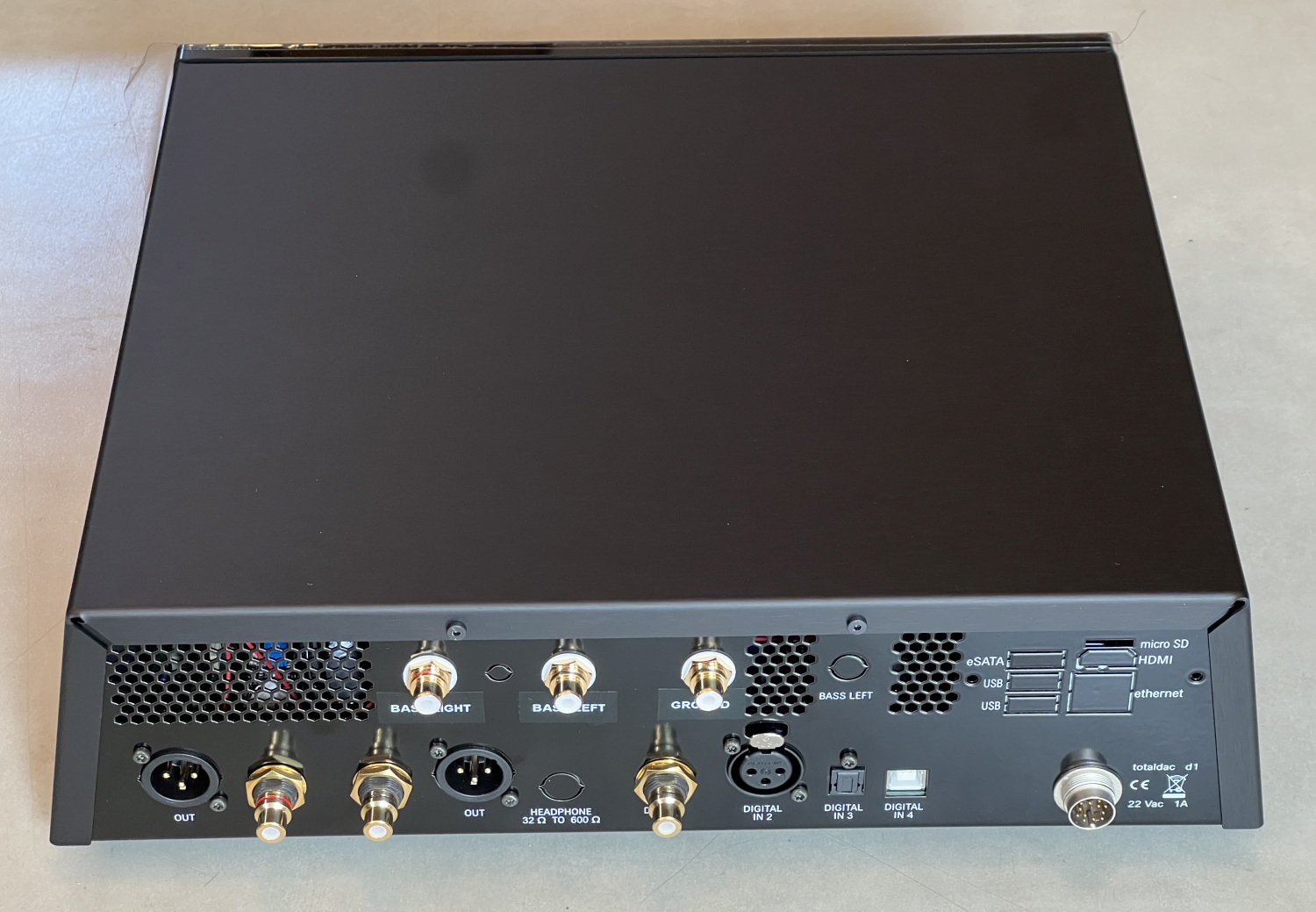
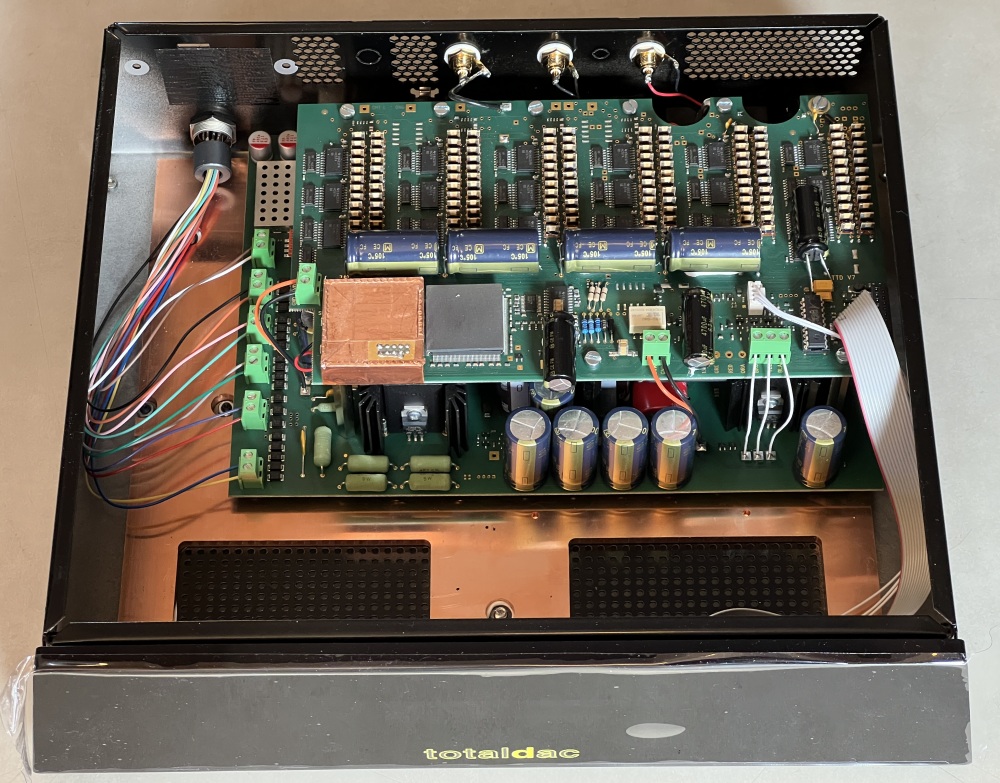
d2-core
The d2-core is the 2-way crossover/DAC based on the d1-core, it is composed of:-two d1-core channels, with RCA and balanced XLR outputs (each balanced output for bass is made of 2 RCA connectors or a short cable terminated by a male XLR connector)
-the 2 way crossover processing
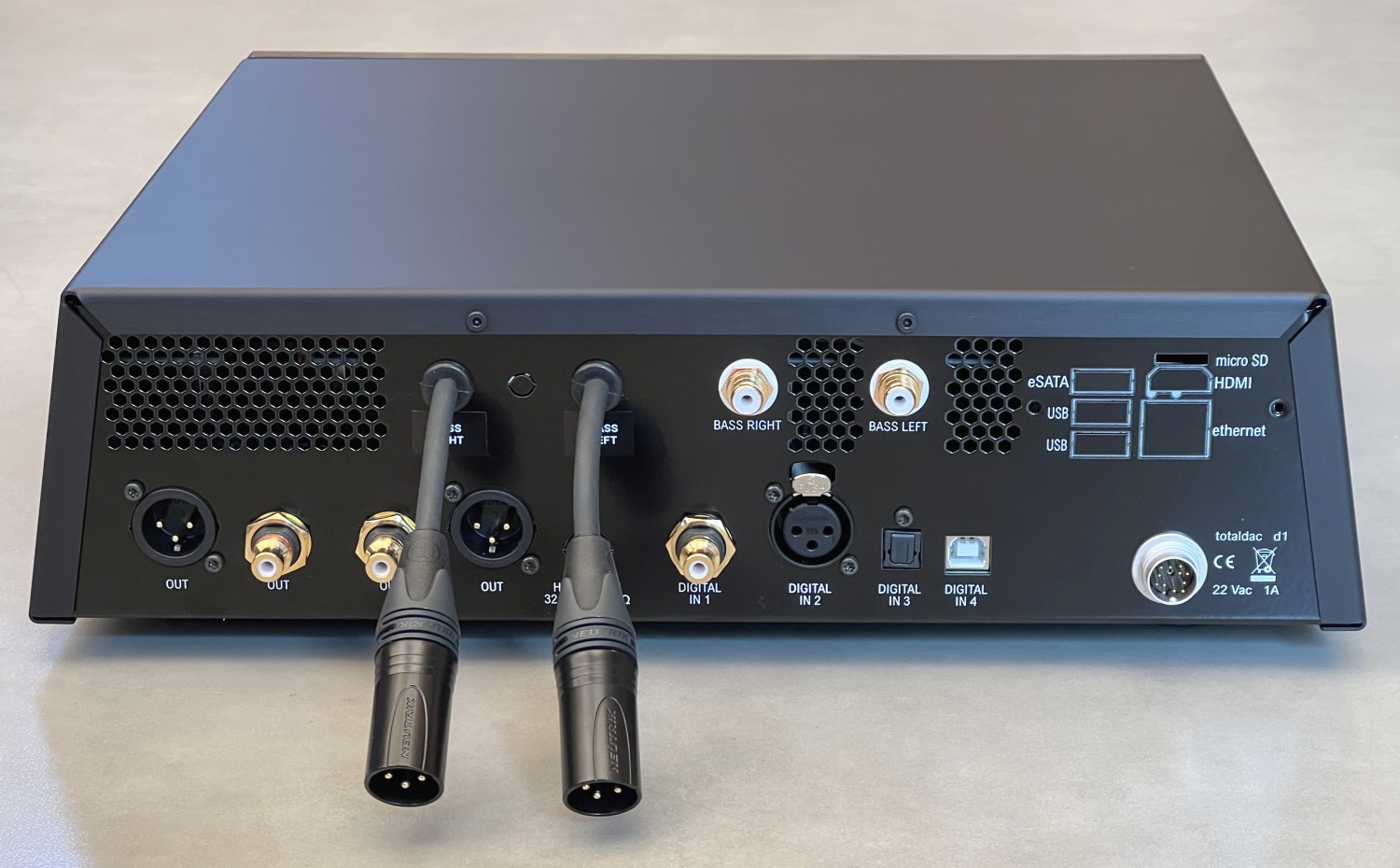
d3-core
The d3-core is the 3-way crossover/DAC based on the d1-core, it is composed of:-three d1-core channels, with RCA outputs for all 3 channels and XLR only for the treble channel
-the 3 way crossover processing
Totaldac can also supply transformer based RCA to balanced XLR converters, with or without signal attenuation.
Multi box
Totaldac can also associate several DAC boxes to make biggers crossovers. Price on demand.
mobile phone: +33 6 18 03 14 08 (European time zone, Whatsapp compatible)